Field Day
Field Day July 18, 2026
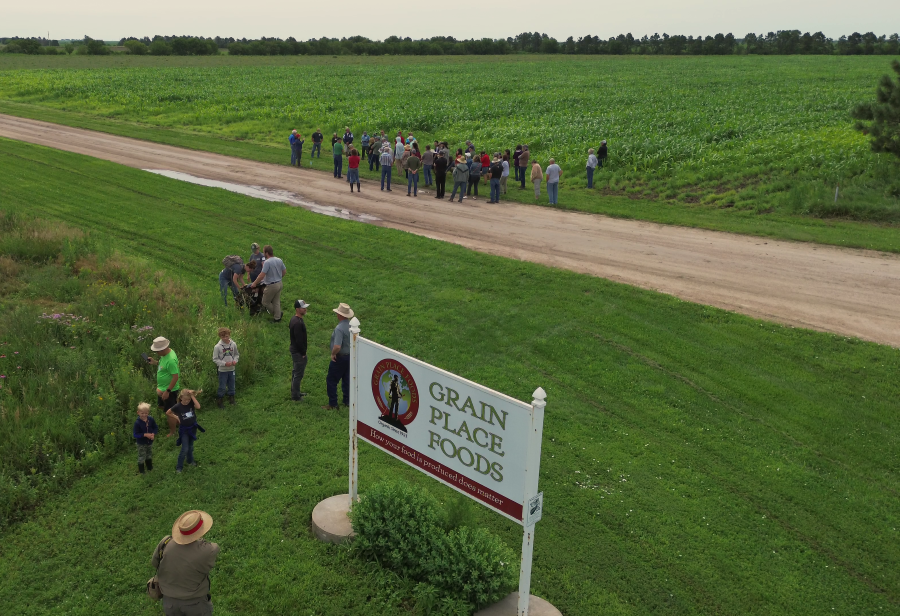
Join us for our annual Grain Place Foundation Field Day on Saturday, July 18th – a day of learning, inspiration, and community.The event will start with a guided tour of our regenerative organic farm and grain processing plant to see firsthand how we prioritize healthy soil and healthy food at the Grain Place.
Then, we’ll head to a local venue for an engaging afternoon program featuring a keynote presentation by The Director of Science and Stewardship for The Nature Conservancy in Nebraska, Chris Helzer, followed by a panel discussion on the connection between soil, human, and community health with Jesse Eugene Bell, Ph.D. & Matthew Sanderson, PH.D., and Chris Helzer., with a delicious farm-to-table lunch made with organic ingredients.
We look forward to welcoming you! The event runs from 8:00am to 4:00pm.
– Morning tours: 1904 N. Hwy 14, Marquette, NE 68854 | 8:00 – 11:00am
– Afternoon program: 2211 Q St, Aurora, NE 68818 | 11:30am – 4:00pm
Feel free to attend only the morning tours, just the afternoon program, or both.
If you have further questions about Field Day, please email: avetter@grainplacefoods.com
Online Field Day Registration
Is Closed
Register in person at Grain Place Foods in Marquette or The Leadership Center in Aurora.
Morning Schedule
at the Grain Place in Marquette, Nebraska
8:30
Registration
Registration for Field Day including snacks and coffee.
9:00
Farm Tour
Come see firsthand a diversified organic farm that is ever evolving.
10:00
Foods Tour
Get a tour of our grain processing facility specializing in certified organic foods.
Afternoon Schedule
at the Leadership Center in Aurora, Nebraska
11:30
Lunch
Farm To Fork lunch prepared by Chef John Boeder
12:15
Keynote
Keynote presentation by Chris Helzer
1:00
Presentations
Presentations by Jesse Eugene Bell, Ph.D. & Matthew Sanderson, PH.D.
2:00
Panel Discussion
Panel Discussion on the connection between soil, human, and community health.
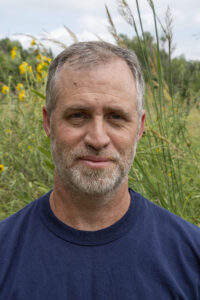
Chris Helzer
Chris Helzer is Director of Science and Stewardship for The Nature Conservancy in Nebraska, where he conducts research and supervises the Conservancy’s preserve stewardship program. He also helps develop, test, and share prairie management and restoration strategies.
Chris is also dedicated to raising awareness about the value of prairies through his photography, writing and presentations. He is the author of The Prairie Ecologist blog, and two books: The Ecology and Management of Prairies and Hidden Prairie: Photographing Life in One Square Meter. He is also a frequent contributor to NEBRASKAland magazine and other publications. Chris and his family live in Aurora, Nebraska.
Panel Discussion
on the connection between soil, human, and community health
With
Jesse Eugene Bell, Ph.D. & Matthew Sanderson, PH.D.
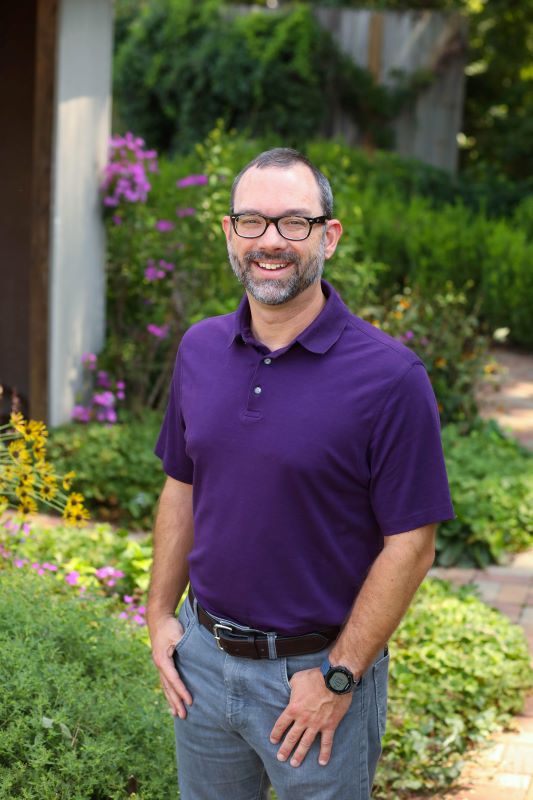
Matthew Sanderson, PH.D
Dr. Matthew Sanderson is the Randall C. Hill Distinguished Professor of Sociology, and Professor of Geography and Geospatial Sciences at Kansas State University. As a social scientist, he has worked most recently on groundwater management at multiple scales, from the community level to the global scale; how social networks shape participation in group decision-making within common pool resource settings; how social factors affect adoption of irrigation technologies; and how culture influences perceptions of the science, knowledge, and information used to make decisions about agricultural adaptations.
Dr. Sanderson has been a Visiting Professor and Research Fellow at the Center for Environmental Resource Management at the University of Texas-El Paso and the Hugo Centre for Population Research at the University of Adelaide in Australia. He is Editor-in-Chief of Agriculture and Human Values, the leading international journal for critical and interdisciplinary research on agriculture and food systems.
His research has been recognized with the Excellence in Scholarship Award from the Agriculture, Food, and Human Values Society, the Leslie Hewes Award for best Social Science Paper in Great Plains Research, the Best Article Award from the World Congress of Sociology and the International Sociological Association, the Karen Ann Griffith Award from Kansas State University, and the Samuel Cohn Distinguished Service Award from the Sociology of Development Section of the American Sociological Association. His research has been supported by the U.S. National Science Foundation, the U.S. Department of Agriculture, the U.S. Environmental Protection Agency, and the Australian Research Council.
Dr. Sanderson holds a Bachelor of Science degree in Finance and Economics and a Master of Arts degree in Sociology from Kansas State University. He earned his Doctorate in Sociology from the University of Utah. He is a Kansan by birth and by choice. A fifth-generation Kansan, he returned home in 2011 to take a position at KSU, his alma mater.
Jesse Eugene Bell, Ph.D.
Dr. Jesse E. Bell is the Claire M. Hubbard Professor of Water, Climate, and Health in the Department of Environmental, Agricultural, and Occupational Health at the University of Nebraska Medical Center (UNMC) and holds a joint appointment in the School of Natural Resources within the Institute of Agriculture and Natural Resources at the University of Nebraska–Lincoln. He serves as director of the Water, Climate and Health Program at UNMC and director of Water, Climate and Health at the Daugherty Water for Food Global Institute at the University of Nebraska.
The mission of these programs is to advance interdisciplinary research, education, and collaborative solutions to public health challenges associated with environmental issues in Nebraska and around the world. As the founding director, he helped lead the develop of the mission, goals, and strategic vision for this collaborative initiative that has grown to currently support 19 faculty and staff, 17 students (PhD, MD, MPH, and undergraduate), and 6 affiliated faculty. His expertise and scholarship focus on understanding how human and natural processes are linked to changes in the environment and climate.
Prior to joining UNMC, Dr. Bell served in an interagency position between the National Oceanic and Atmospheric Administration (NOAA) and the Centers for Disease Control and Prevention (CDC). In this role, he developed innovative approaches to integrate NOAA data products into CDC operations and fostered collaboration between agencies to advance understanding of climate impacts on health.
Dr. Bell has authored more than 80 scientific articles, book chapters, and technical reports. He was a lead author of the U.S. Global Change Research Program report The Impacts of Climate Change on Human Health in the United States: A Scientific Assessment (released by the White House in 2016) and a contributing author of the Human Health chapter for the congressionally mandated Fifth U.S. National Climate Assessment. He is also an expert on the drought impacts on human health and helped with creating a national strategy document for NOAA on integrating public health into drought planning and preparedness in the United States. His work also advances water quality protection by examining how contaminants such as nitrates and other agricultural pollutants affect human health and by developing science-based communication strategies to safeguard Nebraska communities.
Dr. Bell is a native Nebraskan and earned his Ph.D. from the University of Oklahoma.

Become a Sponsor
We are currently seeking additional Sponsors for Field Day 2026. Your donations support not only the Field Day event, but enable the ongoing work of the Grain Place Foundation.
Meet the Chef
Farm to table lunch prepared by Chef John Boeder at The Leadership Center

JohnBoeder
Executive Chef
As the Executive Chef at The Leadership Center in Aurora, Nebraska, I’ve turned a lifelong love of food into a mission of connection and hospitality. My passion started in the kitchen with my family and has grown through years of hands-on experience, learning alongside talented professionals and always staying curious.
At The Leadership Center, I lead a dedicated culinary team that prepares meals for groups ranging from 10 to over 500 guests. We cater across the state and serve communities through our food truck, bringing quality meals to people from all walks of life.
Teaching is one of the most fulfilling parts of my role. I work with students in the kitchen on everything from candy and chocolate making to smoking meats and baking thousands of Christmas cookies. I’ve led hands-on classes in cake decorating, candy-making, and even sushi rolling. We’re committed to ensuring every guest is well-fed, including those with special dietary needs—because everyone deserves a meal that tastes great and meets their needs.
I believe a good meal can do more than satisfy hunger—it can build community, spark conversation, and create lasting memories. “Creating Moments that Matter”
Lodging is available at The Leadership Center, a premier conference and retreat center located in Aurora, Nebraska.

Tilth Sponsors
Roots Sponsors



Planter Sponsors




In Kind Sponsors

Transition to Organic Partnership Program (TOPP)
Field Day is supported through the United States Department of Agriculture (USDA) Transition to Organic Partnership Program (TOPP). TOPP is a program of the USDA Organic Transition Initiative and is administered by the USDA Agricultural Marketing Service (AMS) National Organic Program (NOP)